Listen To Music | Advertise | About Synthtopia | RSS News Feeds | Submit Items For Review | Feedback


Buchla synthesizer

Articles about Buchla synthesizer:


YouTube Preview Image

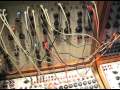
This video, via Synthfool, captures a Buchla Series 100 modular synthesizer in action. Read more…


YouTube Preview Image

The name Blind Old Freak has been popping up around the web in the last couple of months.

On YouTube, BlindOldFreak has been posting a series of electronic music videos that have been capturing equal attention for the music and the Buchla synth gear porn.

On SoundCloud, blindoldfreak has posted several tracks in an experimental ambient electronic style:

Different tracks are posted at blindoldfreak’s extremely minimal MySpace page. Read more…


http://www.vimeo.com/2152398

Joe Pascarelli’s Buchla ring mod riff -  all audio from the 200e but going through the 111 ring modulator. The 123 is choosing pitches of the 261 principle and mod. oscs.


At the new Buchla Tech blog, Mark Verbos offers 14 reasons why the Buchla 200 is “the best modular electronic instrument ever made.”

Here are a few highlights:

1. Don Buchla designed the front panel of his instruments first and the electronics second. A musician himself, this means that each module was an idea for a musician’s tool rather than an engineer’s.

2. Audio paths and control paths are totally divided. The control path uses unshielded stacking banana cables. The audio path uses 1/8″ mini cables. On early modules the control paths and signal paths even used separate power rails! The audio signals are line level, just like all the signals in a recording studio, so patching in and out of the system is seamless. The stacking bananas are great for control signals, they mult simply. The EF Johnson banana jacks come in a variety of colors, which Don used to code what the jacks are used for.

3. Controls sweep within a musically useful range. This is in some ways related to #2. Because audio processing modules never have to concern themselves with CV signals and vice versa, the controls don’t have half of their rotation representing useless values, like a Serge.

5. Circuit boards are all mounted parallel to the panel, making the system take up less space behind the panel than most modulars. This allows for the suitcase cabinets and folding 203 cabinets. I will never understand the MOTM/Moog/Blacet/whatever system of mounting PCBs sticking way out back.

7. Analog address of sequencers. Most of the time a sequencer is simply going to be pulsed along linearly. But having the CV in to sweep through the range of steps allows the sequencer to be used in several new ways including as a quantizer, tracking generator and more.

9. Source of Uncertainty. These days, all modulars have noise and sample & hold modules, but nobody ever made so many specific and musical options available to make sounds randomly shift and evolve. All hail the 266!

12. Voltage Controlled Panning. The 207 allows 2 channels to be sweeped around via a CV. The 227 and 204 allow quad panning from 2 CVs. Simple yet wonderful.

13. Tunable Touchplate Keyboards. Those users who have no interest in playing a piano keyboard can rig up a 217 to do lots of things that no other system has ever allowed.

See the full article at the Buchla Tech blog. 

Image: synthesizers


    Search

      Translator

      something to think about

      Once I know what the first page is, then the rest will come. — William Bolcom

      Latest Comments


      Got Free Music?

      dj-dog

      Check out the Synthtopia music sharing group, where you can share your electronic music and download great tracks from Synthtopia readers!

      Follow Me on Twitter

      TwitterCounter for @podcasting_news

      News Feed

      • Any Feed Reader

      New Photos From The Synthtopia Flickr Group

      www.flickr.com
      items in Synthtopia More in Synthtopia pool
    • Site Admin