Electronic Music Studios
Articles about Electronic Music Studios:
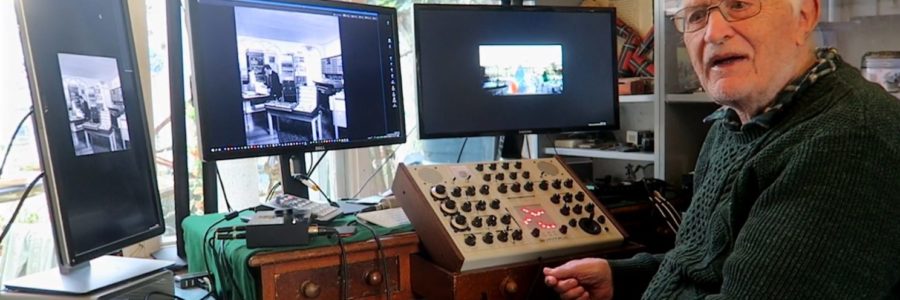
What The Future Sounded Like is a documentary about the the people of EMS (Electronic Music Studios) a radical group of avant-garde electronic musicians who utilized technology and experimentation to compose a futuristic electronic sound-scape for the New Britain.
Comprising of pioneering electronic musicians Peter Zinovieff and Tristram Cary (famed for his work on the Dr Who series) and genius engineer David Cockerell, EMS studio was one of the most advanced computer-music facilities in the world.
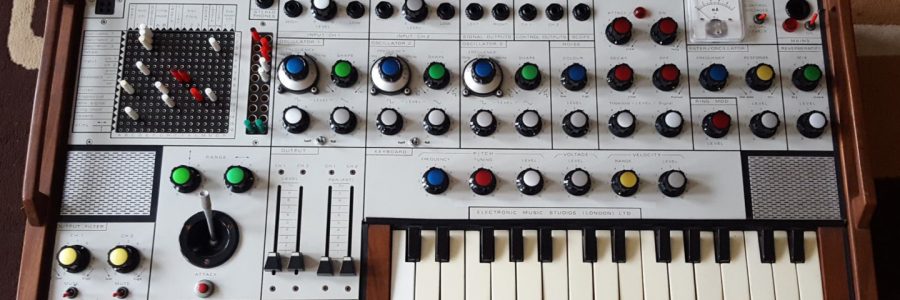
EMS’s great legacy is the VCS3, Britain’s first synthesizer and rival of the American Moog. The VCS3 changed the sounds of some of the most popular artists of this period including Brian Eno, Hawkwind and Pink Floyd.
via bananimalistic:
Pete Townshend’s Synth Secrets
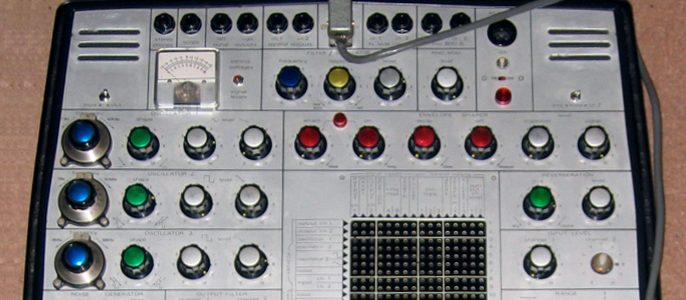
Pete Townshend, in his studio, explains how he achieved the “arpeggiated” organ sound from the classic Who track, Won’t Get Fooled Again by running the organ through the filter of an Electronic Music Studios EMS Synthi VCS3, aka The Putney,
Traffica Voca Electronica
Sunday Synth Jam: Traffica Voca Electronica comes via JeffreyPlaide:
This track is a very unusual composition in that there are very few musical elements in the assemblage. Small samples of sound are spliced together to form various loops. Ethereal sinewaves connect various noises to the vocoded spoken word passages.
The spoken word segment is actually the voice of Peter Zinovieff, whom with his EMS synthesizer company in Britain in the early 1970s produced the classic VCS3 range and Synthi 100 voltage controlled synthesizers. He is actually speaking about the advantages of making sequenced electronic music rather than by cutting up magnetic tape of recorded sounds
Today, it is much easier for the experimental musician to create music with computer software and editing techniques than it was in the late 1960s when Peter was experimenting. This sound collage represents a kind of special tribute to Peter Zinovieff and EMS, albeit in a very unusual arrangement of un-related samples and sinewave tones, culminating to the vocoded spoken word conclusion.
Send to a Friend
|
Feed for this Entry |
Filed under: Electronic Instruments, Electronic Musicians, Keyboard Synthesizers, Sequencers, Synthesizers
This video takes a look at UK electronic music pioneer Peter Zinovieff and Electronic Music Studios (EMS). Read more…
Image: guiltysin
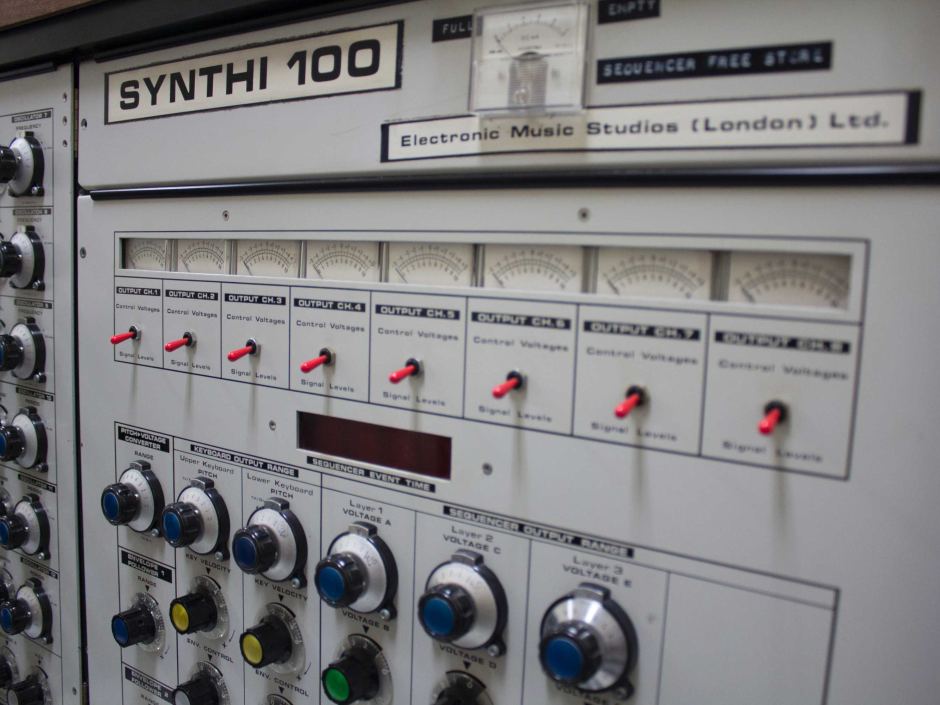
Saturday Synth Porn: Gaze on the Synthi 100, from the Cantos Museum.
The EMS Synthi 100 was a large analogue synthesizer made by Electronic Music Studios (London) Ltd. It was released in 1974 and cost $25,000. Around 30 units (29, according to some sources) were built during the 1970s and 1980s.
The Synthi 100 was developed from a combination of three VCS-3 Systems, ending up with 12 VCOs, two keyboards (each of it duophonic, making it possible to play 4 voices simultaneously), and a 3-track 256-step monophonic digital sequencer. Two 64 x 64 patchbays were used to connect the different modules.
via the Synthtopia Flickr Pool