A Brief History Of Monophonic Synthesizers
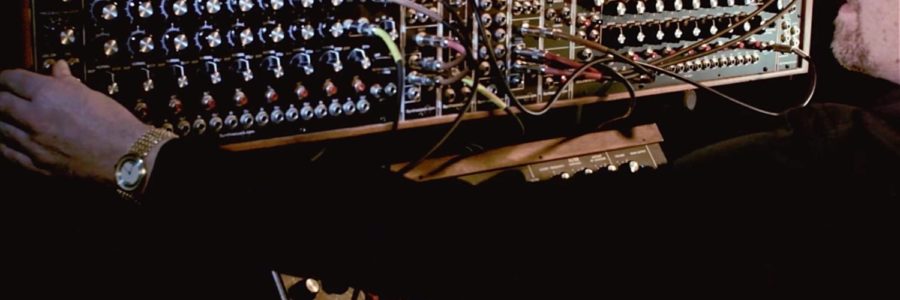
In this video, UK synthesist Benge (Ben Edwards) shares his take on a brief history of monophonic synthesizers.… Read More A Brief History Of Monophonic Synthesizers
In this video, UK synthesist Benge (Ben Edwards) shares his take on a brief history of monophonic synthesizers.… Read More A Brief History Of Monophonic Synthesizers
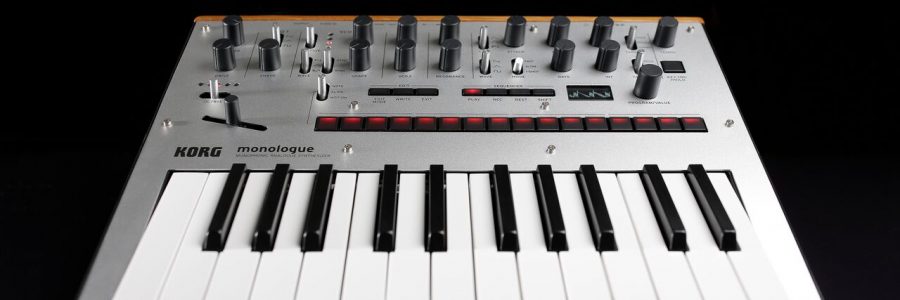
This morning, Korg announced their new Monologue programmable monophonic analog synthesizer. Monologue features a unique new synthesis architecture, a new step sequencer, micro-tuning features and more.

This video offers an in-depth look at a vintage analog monosynth, the Yamaha CS-5.… Read More Yamaha CS-5 Analog Synth Video Demo
Dave Smith Instruments has announced the end of the line of the Mono Evolver Keyboard: It’s time to say goodbye to the Mono Evolver Keyboard, first introduced in 2006. It is currently out of production however there are a few units remaining in stock. Pick one up before it’s gone! In his SOS review of… Read More Dave Smith Instruments Mono Evolver Keyboard Discontinued
mobilesynth (App Store link) is an open source classic monophonic synthesizer for the iPhone, designed for live performance. Developers are encouraged to visit the project website and contribute. If you’ve used mobilesynth, leave a comment with your thoughts!
http://www.youtube.com/view_play_list?p=48438CAC0E45FD4B The Yamaha CS-05 is a single oscillator monophonic synthesizer, released in 1979, that has been described as “an unremarkable synth”: It was a one oscillator job with a single ADSR envelope that controlled both the filter and the final amplifier. A simple LFO was provided for modulation and it also had a noise generator… Read More Yamaha CS5 Analog Monophonic Synthesizer
Overview: The Oxford Synthesiser Company (OSC) OSCar is a vintage mono-synthesizer, first released in 1983. It features two digitally controlled oscillators and twin 12dB filters, which can be configured as lowpass, highpass and bandpass filters. It also featured some early digital capabilities, like patch memory and a basic sequencer. An unusual feature of the Oscar was it’s additive… Read More The OSCar Monosynth
