This Is The Most Beautiful Music Video You’ll See For A Long Time
YouTube Preview Image

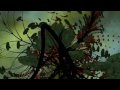
Glenn Marshall – The Nest That Sailed The Sky, Computer-generated Visualisation 2009

Glenn Marshall does something that few video artists do – he makes abstract videos, based on generative processes, that are full of beauty and wonder.

His work is almost a visual analogy to Brian Eno’s work with generative music.

This is his video for Peter Gabriel’s The Nest That Sailed The Sky.

Details on Marshall’s video below. Continue reading

Is This The Most Powerful Remixing Tool Ever?

YouTube Preview Image

Musikmesse 2009 update: Peter Gabriel Voice Extraction

This demo showcases sonicWorx Pro – a Mac app that can split audio signals into their components, allowing you to view and edit audio based on the actual sounds present within the mix.

sonicWORX Pro allows displaying, extracting and suppressing individual instruments and voice in a mix in a semi-automatic manner using a powerful pattern detector. Prosoniq?s  pattern tracker automatically detects, tracks and resolves conflicts with other instruments based on hints given by the user.

sonicWORX Pro will be shipping in July 2009 at a recommended retail price of 1.690 Euro ($1.849 USD). It’s a steep price – but I expect competion in the audio editing area to drive the cost of this technology down fairly quickly.

Give this a look and let me know what you think. Is this the most powerful remixing tool ever?

via audioporncentral

Gorgeous Abstract Music Video For Peter Gabriel’s The Nest That Sailed The Sky

This is a music video by Glenn Marshall for Peter Gabriel’s The Nest That Sailed The Sky.

“I was asked to develop the ?story? further, and got some visual ideas from looking through photos from the original OVO album shoot,” says Marshall. “I got three extra visual ideas from this – single cells, an empty nest, trails of red berries.”

Marshall’s work is very abstract but is also very sensual in its use of shapes and color. You can see more of his work at his Vimeo site.

Let me know what you think!

Nine Inch Nails’ CC-Licensed Ghosts I-IV Nominated For A Grammy Award

This week, the Grammy Awards nominations were announced - and, for the first time, a Creative Commons-licensed track and album are on the list.  Nine Inch Nails? 34 Ghosts IV is nominated for Best Rock Instrumental Performance, while the album that track appears on, Ghosts I-IV, is up for Best Boxed Or Special Limited Edition Package.

Creative Commons licenses are designed to protect your rights to your music, while allowing people copy and share it. 

Creative Commons’ Eric Steuer notes:

This year, NIN released both Ghosts I-IV and a second album, The Slip, under a CC BY-NC-SA license. Both albums were downloaded for free and shared legally millions of times by fans under the terms of this license. At the same time, NIN found great financial success in selling cool, well-crafted, limited edition physical editions of both sets. Back in March, Wiredsaid the band made $1.6 million on Ghosts I-IV in its first week of release alone.

Additionally, Radiohead?s song ?House of Cards? is up for several Grammys, including Best Short Form Music Video. The video?s animation data was released under a CC BY-NC-SA license earlier this year (see previous post).

Congratulations to Nine Inch Nails and Radiohead for the nominations. Also, congratulations to all of the other artists whose work was nominated for Grammys this year, including Brian Eno, Diplo, Danger Mouse and Cee-Lo (AKA Gnarls Barkley), My Morning Jacket, Gilberto Gil, Peter Gabriel, Thievery Corporation, and Cornelius – all of whom have used Creative Commons licenses and/or have supported CC over the years.

Musicians like NIN are using Creative Commons licensing, and giving away their music, to actually gain more control of their careers.

It remains to be seen whether unknown artists will be able to create new careers at the scale of groups like Nine Inch Nails, though.

Glenn Marshall’s Quiet Steam Music Video

Glenn Marshall’s second video for Peter Gabriel, based on a recursive, repeating pattern technique developed in After Effects. The song is a remix of the more commercial single Steam

Marshall took images out of the original video and remixed the video as the audio had been remixed.. 
What I thought was unique is that both the song and the video were remixed into a completely new piece.

“What I thought was unique is that both the song and the video were remixed into a completely new piece,” says Marshall.

Peter Gabriel’s The Drop

Recent videos by Glenn Marshall for electronica groups have turned us into fans – but this older video, for Peter Gabriel’s The Drop – is just as interesting:

This was my first music video, for Peter Gabriel, made in 2003. 

About 2 months to make, I paid special attention to the lyrics, and how imagery and motion would cue up on certain words and phrases.

I also developed further my fascination with choreographed, complex moving patterns, using the same techniques in Butterfly, which involved attaching sprites/images to particle systems. 

Marshall also tells a great story about how this video came to be at his site.