Modular Synthesizer + Video Synthesizer Jam Session
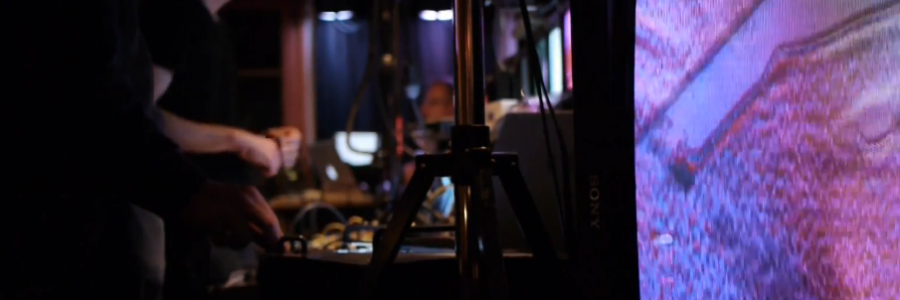
This video captures a modular synth + video synthesizer jam session.… Read More Modular Synthesizer + Video Synthesizer Jam Session
This video captures a modular synth + video synthesizer jam session.… Read More Modular Synthesizer + Video Synthesizer Jam Session

Critter & Guitari have introduced the ETC – a 720p generative video synthesizer. … Read More Critter & Guitari Intro ETC 720p Video Synthesizer

Special Stage Systems has introduced the Ming Micro – a portable 8-bit video synthesizer, with NTSC composite output, integrated chiptune synthesis, SD card slot, USB and MIDI control. They call it “The ultimate pixel art instrument.” Here’s the official video intro:

Critter & Guitari has introduced the Black & White Video Scope – their latest video synthesizer. The Black & White Video Scope is a video synthesizer that generates visual patterns in response to sound. It features 16 patterns, including oscilloscopes, strobe effects, flashing squares, rotating blocks, and random pixels. Some of the modes respond continuously to… Read More Critter & Guitari Intros Black & White Video Synthesizer
Bleep Labs has introduced the new Hard Soft Synth 3jb, a audio + video synthesizer. The HSS3jb features 15 modes of audio/video excellence, each with 4-5 variables of control. There are also 8 video only modes designed for use with the trigger and audio inputs. An adjustable analog filter keeps everything smooth (or as gnarly… Read More New Hard Soft Synth Offers “15 Modes Of Audio/Video Excellence”
This 2012 NAMM Show video, via Sonic State, features LZX Industries and their line of Eurorack video synthesis modules.
Michael Matos‘ Cusp – A Remembrance of the Forgotten is a short film synthesized using LZX Visionary modules, ‘my dearest Eurorack pals’ and an oscilloscope. Matos explains: A small basic lzx system using the vsg, into the tvp, into the video ramps to boost the signal straight to the oscilloscope. I used a variety of euro, especially… Read More Video Synthesis From LZX Visionary Modules
Niklas Roy’s Lumenoise is a DIY project that lets you turn an old TV into a super-cool light synthesizer. Here’s what Roy has to say about the project: Lumenoise is a light pen, which turns your old CRT-TV into an audiovisual synthesizer. You paint abstract geometric patterns and sounds directly onto the screen. It is a… Read More Turn An Old TV Into A Super-Cool Light Synthesizer

HSS3i at Bleep Labs was uploaded by: drbleep
Duration: 178
Rating:  … Read More Bleep Labs Intros Hard Soft Synth 3i – A New Audio + Video Synthesizer
The Synkie is a modular, open-source analog video processor, developed by Michael Egger, Flo Kaufmann and Max Egger. Like a modular audio synthesizer, Synkie lets you work with the signal using patch cables, but producing images, not sound. It is described as “an instrument for video, a playground, a platform to explore new ways to… Read More Synkie – The Modular, Open-Source Video Synthesizer
