Not every synthesizer becomes a classic or even just a workhorse.
Some arrive with ambitious ideas that prove difficult to deliver, some are compromised by awkward design decisions, and others acquire reputations that are hard to shake.
Here are five instruments whose shortcomings, commercial disappointments or notorious reputations earned them a place in synth history’s turkey pen.
ARP Avatar: The Guitar Synth That Couldn’t Keep Up
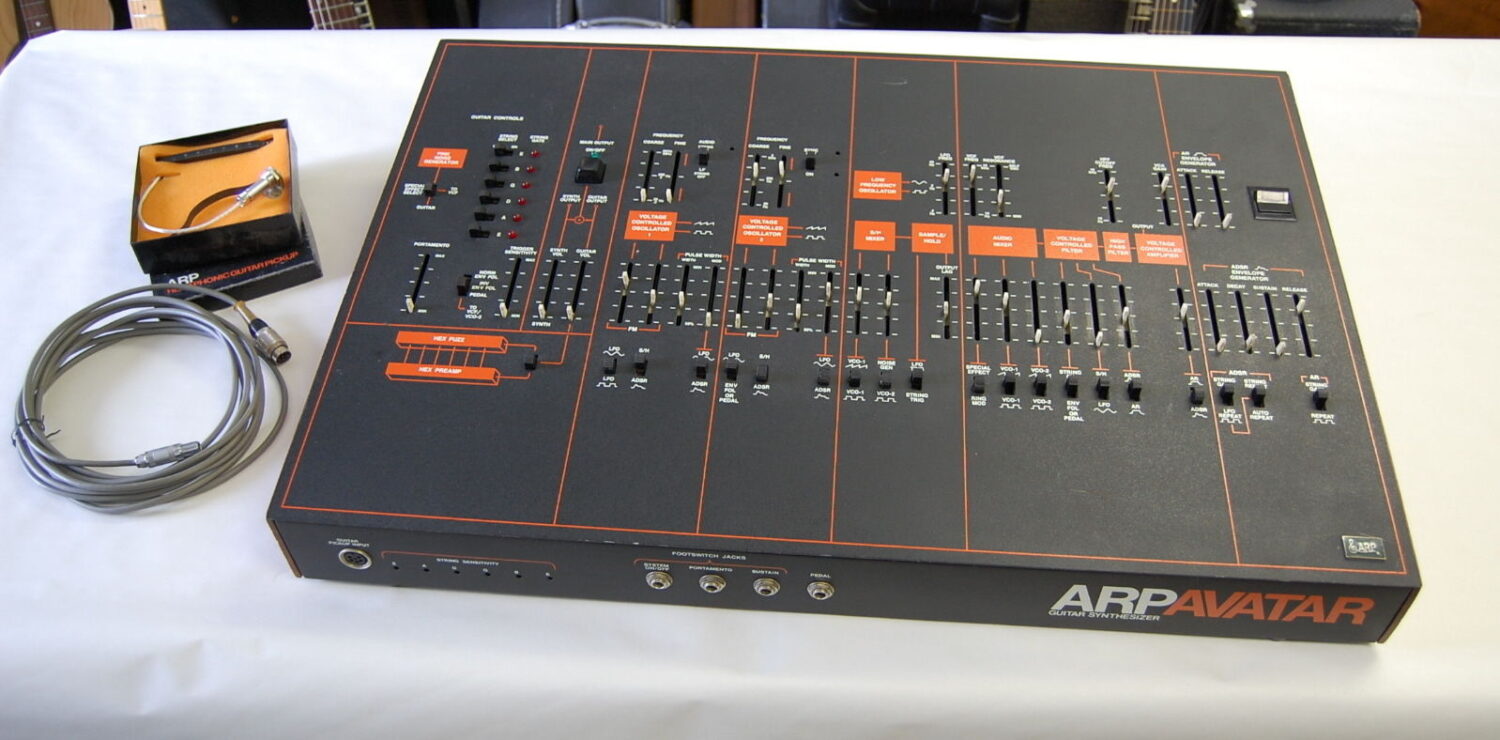
Image: MATRIXSYNTH
In 1977, ARP set out to bring synthesizer sounds to guitarists with the Avatar, a guitar-controlled instrument built around technology related to the Odyssey. The concept was compelling: a special hexaphonic pickup tracked the strings and converted their pitches into control signals for the synth.
The problem was tracking. The pitch-to-voltage system could glitch or produce unwanted pitch changes unless the guitarist played with unusually precise technique. It was also monophonic, despite the pickup sensing individual strings, and its roughly $3,000 price made it a difficult sell.
As a result, the Avatar became a costly commercial disappointment and is often cited as one of the factors in ARP’s financial failure. The synth engine itself could sound good – but getting a guitar to control it reliably was another matter.
The Alan R. Pearlman Foundation’s history of ARP explains why the Avatar’s guitar interface struggled to win over players.
Moog Polymoog: A Reliability Headache

The Moog Polymoog delivered a distinctive take on polyphonic synthesis, and its sounds became part of recordings by artists including Gary Numan, Kraftwerk and Prince.
Its reputation, however, comes with a substantial asterisk: the instrument’s complex design created production difficulties and reliability problems once it reached musicians.
That makes the Polymoog a more complicated turkey than a synth that simply sounds bad. Its tone and musical legacy are undeniable, but owning and maintaining one could be a costly proposition. It is a reminder that an instrument can be musically influential and still be a frustrating purchase.
Cornell University’s Moog exhibition documents the design complexity and reliability issues behind the Polymoog.
Yamaha DX9: The DX7’s Underpowered Sibling

The Yamaha DX9 arrived alongside the DX7 in 1983 as a more affordable way into FM synthesis. But the cost savings came with a long list of compromises.
It had four operators and eight algorithms rather than the DX7’s six operators and 32 algorithms, only 20 internal patch memories, no cartridge slot, and a keyboard that lacked velocity sensitivity and aftertouch.
The DX9 could make worthwhile sounds, but it was difficult to program and offered fewer ways to shape and perform them than its famous sibling. It also lacked the distinctive identity that helped some of Yamaha’s later four-operator FM synths find an audience.
It wasn’t a disaster, so much as a product whose compromises made it a sad alternative to the DX7.
MusicRadar’s look at an alternative DX9 firmware outlines just how many DX7 features were left out of the original instrument.
Red Sound DarkStar: The Internet’s Most Reviled Synth
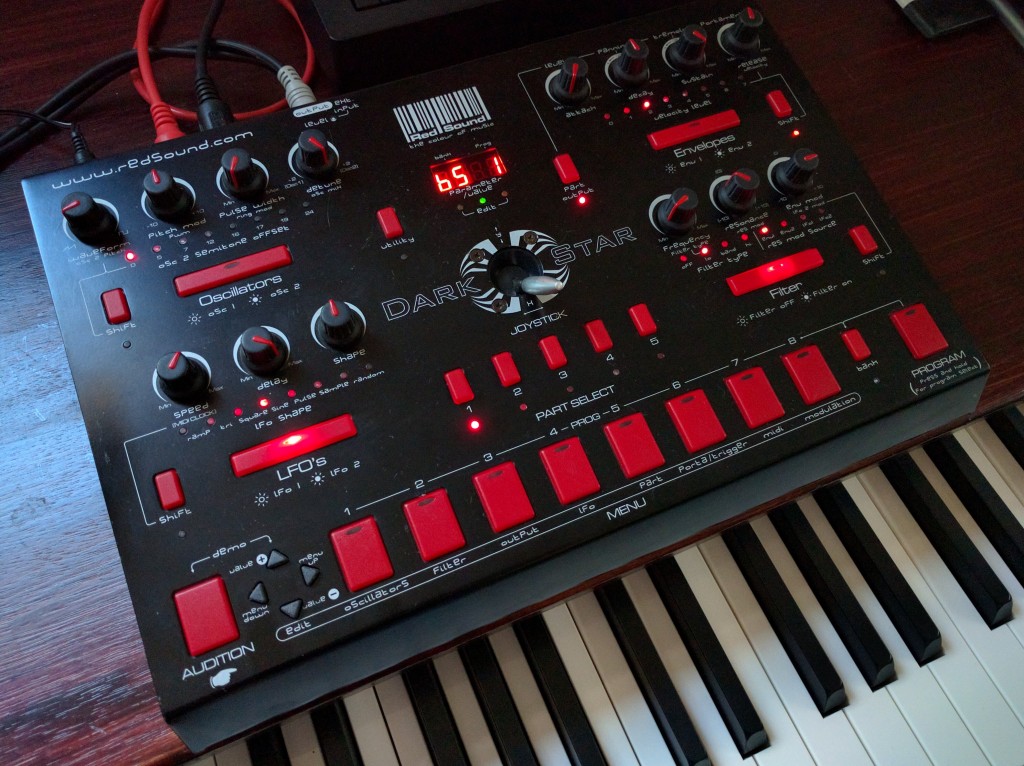
The eight-voice Red Sound DarkStar was a feature-packed virtual-analog synthesizer when it appeared in 1999. It received a positive review on release, but never found a large audience and was discontinued after a relatively short run.
Over time, it developed an unusually hostile reputation in online synth discussions.
That reputation is part of the story, but it shouldn’t be mistaken for a unanimous verdict.
In 2015, Synthtopia highlighted musician John Keston’s attempt to revisit the much-maligned instrument. He found shortcomings, but also character and flexibility worth exploring.
The DarkStar may be less a universally bad synth than an example of how a product’s reputation can become more extreme than the instrument itself.
Akai Timbre Wolf: The Four-Voice Doghouse

The Akai Timbre Wolf sounded great……on paper. It offers four independent analog synth voices that could be used as a four-part multitimbral instrument, a polyphonic synth or stacked for thicker sounds.
But its architecture came with some serious limitations. Each voice had a simple decay envelope, the tuning control offered little range beyond detuning, and the filter could lose substantial volume at high resonance.
The controls also offered a limited range of control over the instrument’s sound – as if the pots had been specified incorrectly.
Its MIDI implementation also frustrated players who wanted to control it as a conventional polyphonic keyboard synth from a single MIDI channel.
The Timbre Wolf was built solidly and could produce distinctive sounds, but its compromises helped make it a punchline almost as soon as it arrived. A later reassessment found plenty to like in its odd character, which may be the most charitable way to describe this particular turkey.
MusicRadar’s Timbre Wolf review details the instrument’s strengths as well as its design compromises.
What are your ‘Synth Turkeys’?
A synth that’s a commercial failure isn’t automatically a bad instrument. And a synth with reliability problems can still make wonderful sounds. So, some of these machines have devoted fans.
Is there an instrument whose sound, design, reliability or reputation that you think makes it an even stronger contender for the ‘synth turkey’ title? Let us know in the comments!
