For decades, most hardware synthesizers, samplers, and drum machines have operated within the limits of their manufacturers’ software. Users could customize presets and sequences, but adding fundamentally new capabilities usually depended on an official update—or purchasing a different instrument.
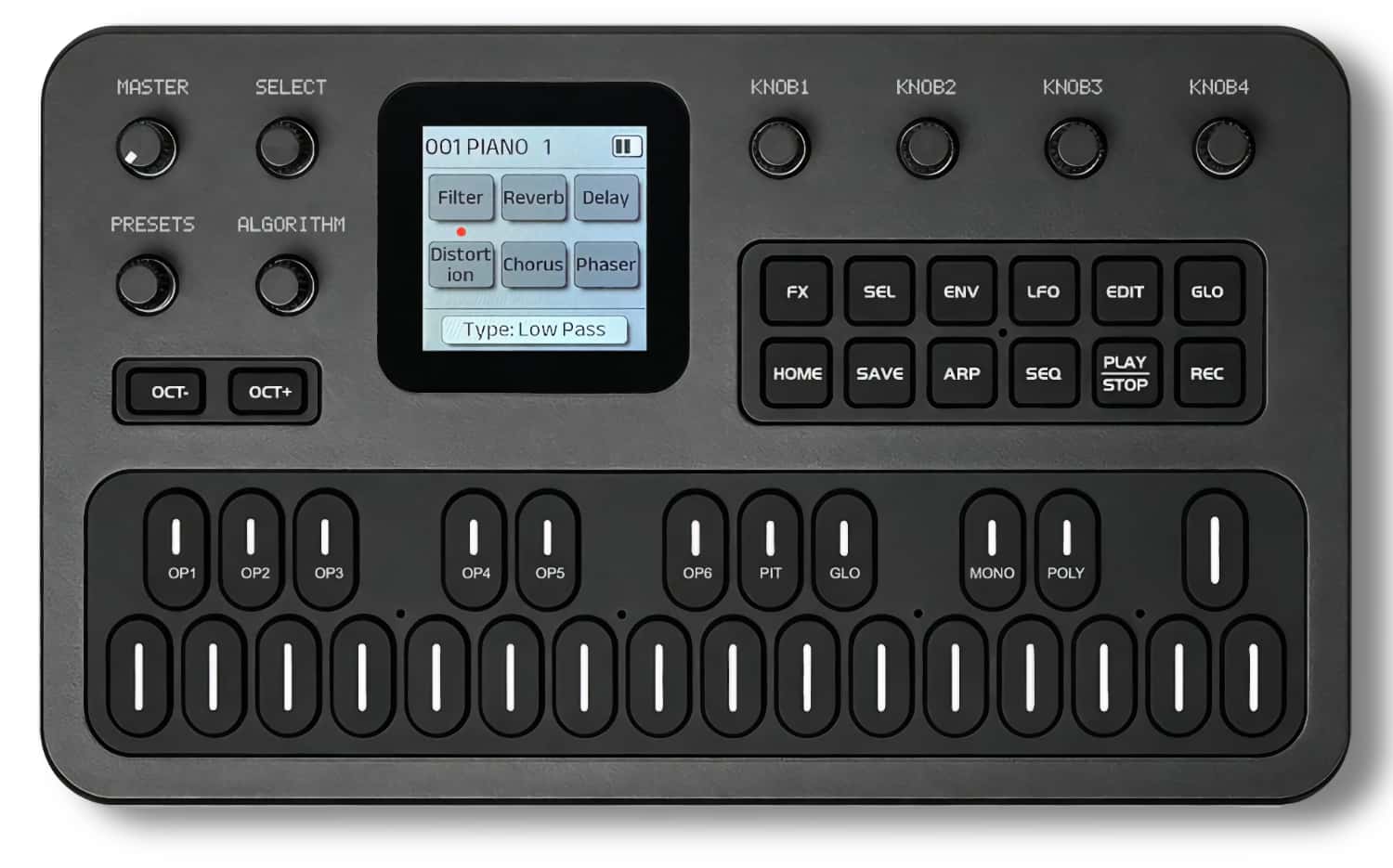
That model may be starting to change. The success of M-Vave’s inexpensive FM-1 synthesizer has helped demonstrate how a relatively affordable piece of hardware can become a platform for community-developed software. Independent developers have experimented with alternative synthesizers, sequencers, effects, and other applications, leading M-Vave to release an official development environment.
Now, larger music technology companies are exploring opening their platforms and supporting the alternate firmware trend:
- Akai Professional has previewed an open-firmware approach for its upcoming SampleKey and MPC Sample ecosystem.
- Behringer has published source code for its KICK music production device.
- And Erica Synths has released the LXR-02 drum machine’s firmware as open source.
These initiatives are not identical, and not every project provides complete access to every component of an instrument. But they raise an important question for the industry: Will open firmware be the next big trend in electronic music gear?
M-Vave FM-1: The Catalyst
The M-Vave FM-1 is a compact, affordable FM synthesizer that has attracted attention beyond its original feature set. Its hardware has become a target for independent developers interested in replacing or extending the software, creating new musical applications for a device that costs considerably less than many established synthesizers.
M-Vave’s response has been to provide an official development platform. The FM1 Open GitHub repository includes source code, a software development kit, and a browser-based workbench for managing projects, samples, voices, and firmware.
The platform has continued to evolve, with documented features including multitrack sequencing, sample slots, effects demonstrations, MIDI functionality, and support for importing and exporting DX7 voices. That gives developers a practical foundation for experimentation rather than requiring them to start entirely from scratch.
There are limits to the openness, however. The application code is available under GPL terms, but the underlying FM-1 sound-engine library remains a binary component. Open firmware does not necessarily mean that every part of the instrument’s software has been published.
Nevertheless, the FM-1 demonstrates the potential of inexpensive hardware as a community development platform. Instead of treating a device’s factory feature set as its final form, musicians can explore what else the hardware might do.
Akai SampleKey: A Major Manufacturer Invites Community Development
Akai Professional has previewed SampleKey, a keyboard-equipped companion to its MPC Sample portable sampler. The teased instrument features a 25-key, two-octave keyboard, pitch and modulation wheels, a display, and sampling capabilities.
The more significant announcement concerns its software. Akai has shown community-created applications that transform the hardware into other types of instruments, including chord-generation tools and synthesizers. Demonstrations have included virtual analog, FM, and wavetable synthesis, and more.
View this post on Instagram
Akai’s parent company, inMusic, has indicated that its approach will include community access to hardware, open-sourcing some software, and providing a software development kit. Akai has also shown similar modifications running on the existing MPC Sample, suggesting that the initiative could extend beyond SampleKey.
The exact scope of the source-code release and development tools are still to be announced, but the initiative promises to bring bring community-created applications into the plans of an established manufacturer with a large installed base of sampling hardware.
Behringer KICK: Open Development From the Beginning
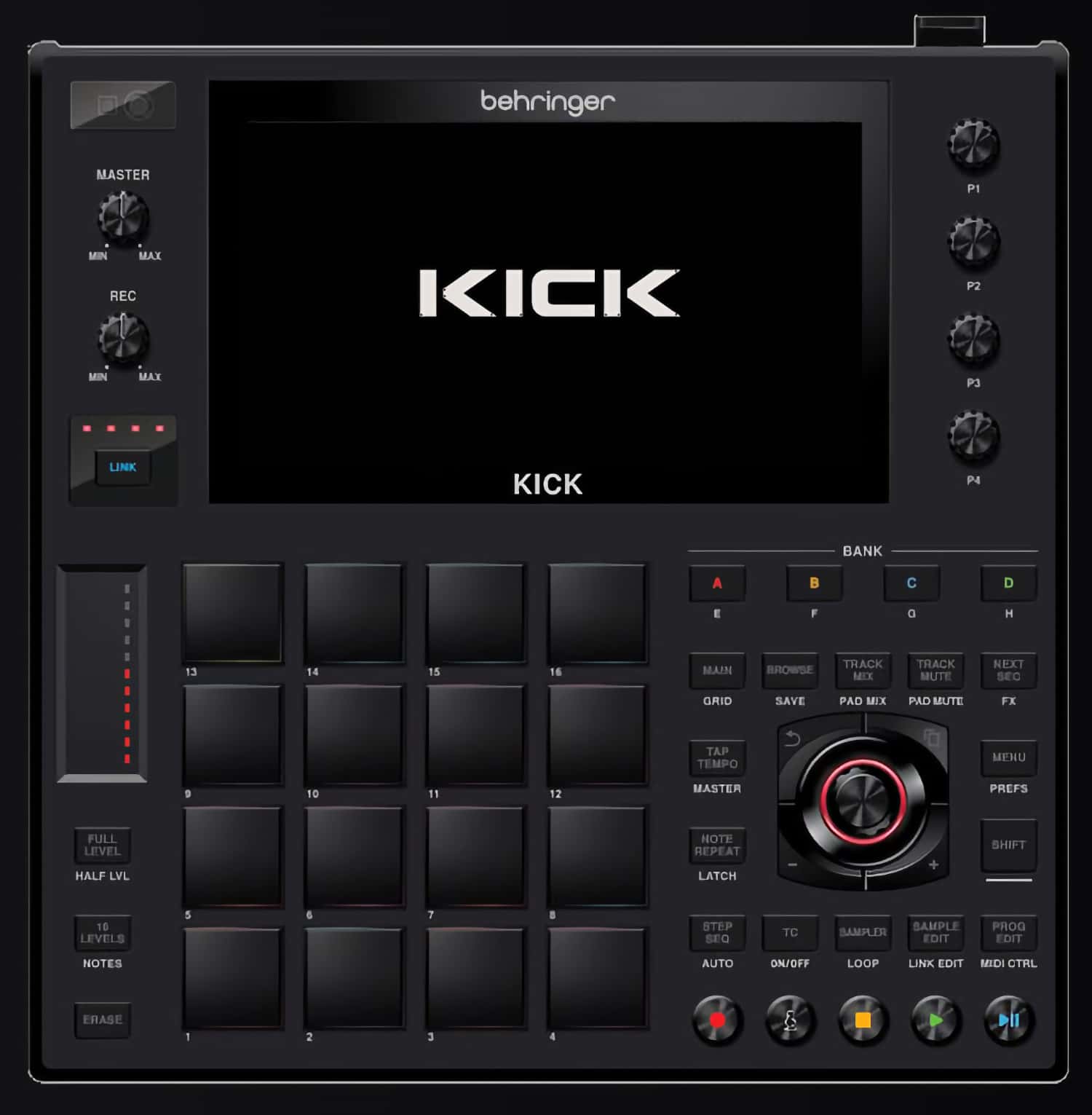
The Behringer KICK is a standalone music production device built around sampling, sequencing, looping, and performance controls. Its proposed feature set includes a touchscreen, 16 RGB pads, multiple effect processors, MIDI connectivity, and CV/Gate connections.
What makes KICK especially relevant to this discussion is that Music Tribe, Behringer’s parent company, has published a substantial software repository before the product has reached retail. The KICK GitHub repository includes the application, audio engine, hardware communication code, and Linux build system, with the main project components published under open-source licenses.
The company has explicitly encouraged developers to use the code to create, modify, and reinvent the instrument’s capabilities. This places community development close to the center of the product’s identity, rather than leaving it as an unofficial activity that emerges after release.
KICK is still a developing product, so its eventual hardware specifications, software support, and retail availability should not be assumed to be final. But publishing the code at this stage suggests that Behringer is commited to the platform, and sees community-driven firmware as a potential selling point.
It also raises a competitive question: if musicians can build new applications for a device after buying it, the value of the hardware may depend as much on its development community as on the features included at launch.

Erica Synths LXR-02: Open Source From an Established Instrument Maker
Erica Synths has taken a more direct approach with its LXR-02 digital drum machine. On October 23, 2026, the company announced that the instrument’s firmware was now open source and available on its GitHub site.
The LXR-02 combines six digital drum voices with extensive sound-design parameters, sequencing, and effects. Publishing its firmware gives developers access to the code that controls the instrument, allowing them to investigate its architecture and explore potential changes or new features.
Unlike the unofficial firmware projects that have grown around some popular instruments, this is an explicit decision by the manufacturer to release the code. It also demonstrates that open firmware is not limited to low-cost products: the LXR-02 is an established instrument designed for hands-on drum synthesis and electronic music production.
Erica Synths has made the limits of its support clear. The company continues to support its original firmware, while modified versions are installed at the user’s own risk. Damage to the bootloader can require a paid repair.
The distinction is important. Publishing firmware source gives a community more freedom, but it does not automatically mean that a manufacturer will support every modification or assume responsibility for problems caused by unofficial firmware options.

Roland SP-404MKII: DOOM OS Shows the Power of Unofficial Firmware
Not every example of this trend originates with a manufacturer. DOOM OS, an independent project from Klangfeld Labs, modifies the software running on Roland’s SP-404MKII sampler to add a graphical sequencer and other workflow improvements.
The project includes a pattern grid, piano-roll editing, live recording tools, a track mixer, effect automation, custom shortcuts, and pattern-editing functions such as quantization, swing, reversal, and humanization. These additions give users alternative ways to program and edit sequences on hardware that was originally designed around a different workflow.
The project’s current published release is version 0.6.2-alpha, based on Roland firmware 5.52. It is not an official Roland release, and its developers warn that installing modified firmware carries risks. Users should back up their data and follow the project’s installation instructions before attempting a modification.
DOOM OS is relevant because it illustrates the demand that can develop around established hardware. Even a successful instrument can have unexplored possibilities, and independent developers may be willing to address workflow requests that the manufacturer has not prioritized.
Other Examples: The Trend Extends Beyond These Manufacturers
The FM-1, SampleKey, KICK, and LXR-02 are not the only relevant projects, although the level of manufacturer involvement varies considerably.
M-Vave’s broader product ecosystem is worth watching, but each product should be evaluated separately rather than assuming that the FM-1 development model applies to all of the company’s hardware. Official firmware and development resources can be checked through the M-Vave downloads page.
The trend seems to build on the ‘semi-open’ approach that Korg has taken with its ‘logue devices. Synths like the Minilogue XD and Prologue support user-created oscillators and effects, significantly expanding the capabilities of these devices, and allowing users to customize their gear to their needs. The initiative has been successful enough for them to add a drum machine, the Drumlogue, and other devices.
Community developers have also experimented with alternative software and firmware for instruments from Elektron and other established manufacturers. These projects show that there is demand for more flexible hardware, but they should not be confused with official open-source initiatives. In many cases, they remain independent efforts with different levels of access, documentation, and support.
The broader open-source music technology movement also provides useful context. Software projects such as Surge XT and VCV Rack demonstrate how community development can produce mature tools that evolve well beyond their initial releases. Hardware presents additional challenges, because developers must work within fixed processors, memory limits, bootloaders, and physical interfaces, but the underlying appeal is similar: users can contribute ideas and capabilities that a single company might never develop on its own.
And the entire trend is fueled by AI LLM tools and the rise of so-called ‘vibe-coding’. These tools are advanced enough that non-coders are now de-compiling firmware, creating virtual machines, and releasing alternate firmware.
The electronic music community is divided on its reception of ‘vibe-coded’ software. It’s led to a massive increase in the number of music software releases in the last few months, and some musicians see the explosion of new options as being of questionable quality, and just more ‘noise’ to wade through.
On the other hand, alternate firmware seems to be getting a warmer reception. This may be a result of the fact that there have always been small developers releasing music software, but the category of alternate firmware for mainstream hardware is novel and brings new options to electronic musicians.
What Does Open Firmware Mean for Musicians?
For musicians, the most obvious benefit is longevity. A device that supports new community-developed applications may remain useful long after its original feature set begins to feel limited. New sequencing approaches, synthesis engines, effects, and interfaces could make existing hardware more versatile without requiring a new purchase.
Open development can also give users more options and control. A performer might want a custom interface for live use, a producer might prefer a different sequencing workflow, and a sound designer might want to experiment with features that would be too niche for a general-purpose commercial release.
AI-assisted programming tools lower the barrier to trying these ideas. A musician who has never developed a full application may be able to prototype an interface or modify an existing project with help from AI coding assistants. But generated code still needs testing, and reliable audio software requires attention to timing, memory, compatibility, and safe installation.
There are trade-offs. Unofficial firmware can introduce bugs, compromise existing workflows, or create performance problems. Some manufacturers, like Elektron, have raised the spectre of third-party firmware ‘bricking’ gear, making it unusable if an update goes wrong. Manufacturers must also decide how much of their software to publish, which components to keep proprietary, and whether to support community-created modifications.
The term open firmware can therefore describe several different arrangements: complete source-code releases, development kits for creating applications, partially open platforms, or unofficial modifications of closed firmware. Those distinctions matter when evaluating what a company is actually offering.
The emerging opportunity is not simply to make every instrument open source. It is to give musicians more ways to extend the hardware they already own, while providing enough documentation and safeguards for those experiments to be practical.
Will Open Firmware Become the Next Big Trend in Electronic Music Gear?
The M-Vave FM-1 has helped demonstrate how much interest can gather around affordable, modifiable hardware. Akai is exploring a community-driven approach for its sampling products, Behringer is publishing code for KICK, Erica Synths has opened the LXR-02 firmware, and independent projects such as DOOM OS show what can happen when users take development into their own hands.
These examples do not mean that every manufacturer will embrace open firmware, or that open firmware and ‘vibe-coding’ will be permanent trends. They do, though, suggest that the relationship between instrument makers and their customers may be changing, with community-developed software becoming another factor in a product’s long-term appeal.
Will open firmware become the next big trend in electronic music gear? Share your thoughts in the comments!

Mutable Instruments: Am I a joke to you?
Regarding the SP-404mkII there’s another custom project, which is’nt of much use for most users, but for some it’s actually quite lifechanging. It is called Tallfree and basically adds a fully working standalone screen reader to the machine so blind users can access all of the features of this capable, but also quite complicated sampler. I installed it on mine and feel happy to be able to finally work with the instrument at it’s full capacity.