Working With Free Spitfire Audio LABS Virtual Instruments

Here’s a look at how to get the most out of the free LABS virtual instruments, created by Spitfire Audio. … Read More Working With Free Spitfire Audio LABS Virtual Instruments
Here’s a look at how to get the most out of the free LABS virtual instruments, created by Spitfire Audio. … Read More Working With Free Spitfire Audio LABS Virtual Instruments
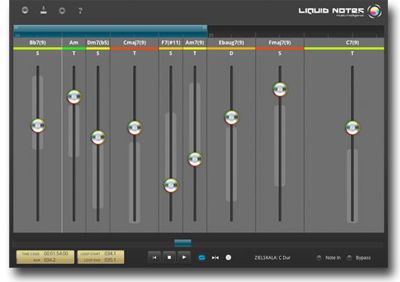
ReCompose recently released an update of its intelligent music production tool, Liquid Notes with an interactive song overview feature which displays all chord regions at once. The addition of the song overview capability is the first in a series of upcoming updates. The addition of an overview of the song gives the user greater control… Read More ReCompose Updates Liquid Notes With Song Overview
Liquid Notes, the “intelligent composing assistant,” has been updated to add its own library of instruments and a track assignment editor. Liquid Notes is an app that integrates “music intelligence” algorithms based on the theory of harmony: chords, scales/melody, and harmonic movement. These algorithms assist the user during the music production workflow: from finding the basic… Read More ‘Intelligent Composing Assistant’ Liquid Notes Adds Instrument Library

thomas p. heckmann @ studio 1/2 was uploaded by: robotstv
Duration: 371
Rating: 
 … Read More The Amazing Synthesizer Museum Of Thomas P Heckman
Eric Ross’s Composing For the Theremin is an interesting and concise article that reviews the unique challenges and opportunities of writing music for the theremin: To write for the theremin effectively one should know its strengths and weaknesses. The theremin is a monophonic instrument; which is to say, it can only produce one pitch at… Read More Composing For Theremin
Matthew Davidson wrote a great post today over at his blog, Stretta, that looks at eight ways to break out of a creative dead end musically. Eight Techniques to Break out of a Creative Dead End Pretend you’re a film composer Create a piece of music using only one piece of gear Don’t use MIDI Eschew… Read More 8 Ways To Break Out Of A Creative Rut Musically
Electronic Musician has released their latest podcast: Film-and-TV composer Ramin Djawadi talks about his score for the hit movie Ironman, and comments on examples from it. He also discusses working in Hans Zimmer’s Remote Control complex, the differences between film and TV composing, and more. What’s New: Len Sasso looks at Rob Papen’s Predator synth,… Read More Electronic Musician Podcast
